
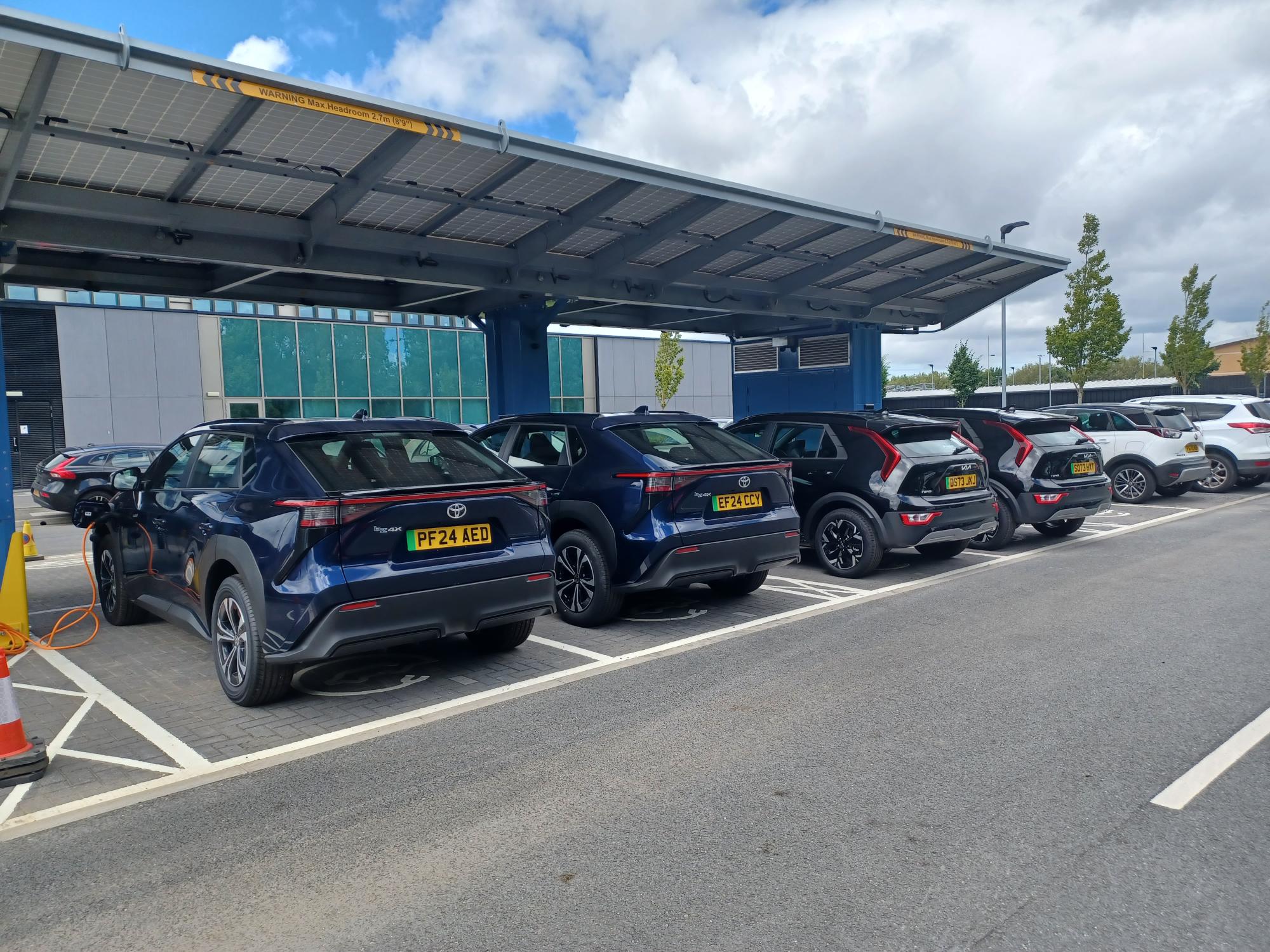
Moving a fleet to electric is mostly a depot problem. Here is how to fund it, plan it and roll it out across more than one site.
Why the depot matters most
Most fleet vehicles come back to base. That makes the depot the natural place to charge them: vehicles are parked, the site is under your control, and the charging can fit around the working day.
Public charging is a useful top-up. It rarely makes a good main plan for a fleet. Get the depot right and the rest gets easier.
Start with the vehicles, not the chargers
Before you look at equipment, answer four questions:
- How many vehicles will you electrify, and how fast?
- How far does each one travel in a typical day?
- How long does each one sit at the depot, and when does it leave?
- How will the fleet grow over the next few years?
Parking time decides charger power. A van that sits for ten hours does not need the same charger as one that turns around in two. Plan space and ducting for growth now. Adding it later costs more.
Check the grid early
Find out how much capacity your depot has before you order anything. Talk to your Distribution Network Operator (DNO) early, because an upgrade can decide your whole timeline.
Smart load management can help. It shares the available power between vehicles, so a connection can serve more chargers than it would otherwise. It will not fix every site, but it is worth testing before you pay for an upgrade.
The depot grant: what to check before you apply
Funding for depot charging has been offered through government schemes, and the details change: scheme names, funding levels, who qualifies and when applications open. Always check the current terms on GOV.UK before you plan around any figure.
Whatever the scheme, these are the questions to answer first:
- Who is eligible? Check fleet type, fleet size and whether the scheme covers your sector.
- What is covered? Chargers, installation, electrical work and grid connection costs are often treated differently.
- Is there a cap per charge point, per site or per organisation? Does it apply across all your sites together?
- Do you need approval before you commit? Many grants will not fund work that started or was ordered before approval.
- What evidence do you need? Expect quotes, site plans and correspondence with your DNO.
- When must the work be finished, and how do you claim the money?
Build the grant timeline into your project plan. Grant deadlines and DNO timelines often collide, and a missed window can cost more than a delay.
Rolling out across multiple sites
Doing one depot well is a project. Doing ten is a programme, and it needs different habits.
- Standardise where you can. The same hardware, the same software and the same install approach at every site means fewer surprises.
- Survey every site early. Do not assume two depots are alike, even if they look it on paper.
- Rank your sites. Start where the vehicles, the grid and the business case line up. Leave the hard ones for later.
- Insist on open standards. Chargers that support the Open Charge Point Protocol (OCPP) can be managed by different software, so you are not locked in to one supplier.
- Get one view of every site. Central management lets you see uptime, energy use and costs across the whole fleet.
- Agree who fixes what, and how fast. Put maintenance and response times in writing before you sign.
- Train depot staff and drivers. A charger no one plugs into saves no money.
- Pilot, review, then scale. What you learn at the first site is the cheapest information you will get.
The takeaway
Fleet charging goes wrong when it is treated as a hardware purchase. It goes right when it is treated as a plan: vehicles first, then the grid, then the funding, then the rollout.
Get the order right, and each site gets quicker than the last.
Planning depot charging across more than one site?
3ti designs and installs solar EV charging hubs. HALO FastHub installs in one day and is designed to use the grid connection a site already has. To talk it through, visit 3ti.co.uk or email info@3ti.co.uk.